A US ham radio license is valid for 10 years from the date it was issued. That ten-year term is printed on your license record, it applies to every class from Technician through Amateur Extra, and it is renewed online without retaking a single exam. Below is how the term is calculated, how to renew inside the window, and what to do if you have already let it lapse.
Most of the confusion I see comes from three separate ideas being mashed together: the length of the license term, the call sign assigned to you, and the legal right to put a signal on the air. They expire differently. Once you can tell them apart, a “my license expired” email stops being a crisis.
One more thing up front. The Federal Communications Commission has a long history of floating fee and term changes, and an old proposal to shorten the amateur term to five years still circulates in forum threads. It did not happen. The amateur radio license term in the United States is still ten years.
Table of Contents
- 1How Long Does a Ham Radio License Last?
- 2What Is the Ham Radio License Validity Period?
- 3How Do You Renew a Ham Radio License?
- 4How Long Does a Ham Radio License Last in the US?
- 5Can You Operate After Your Ham Radio License Expires?
- 6What Happens if You Miss the Renewal Deadline?
- 7Do Call Signs Expire at the Same Time?
- 8How to Check Your License and Expiration Date
- 9Frequently Asked Questions
- 10How long after a ham radio license expires can you renew it?
- 11Do I have to retake the exam if my ham radio license expired?
- 12Can I renew my ham radio license online?
- 13How much does it cost to renew a ham radio license?
- 14Does my call sign change when I renew?
- 15Is the ham radio license term being shortened to five years?
- 16Conclusion
How Long Does a Ham Radio License Last?
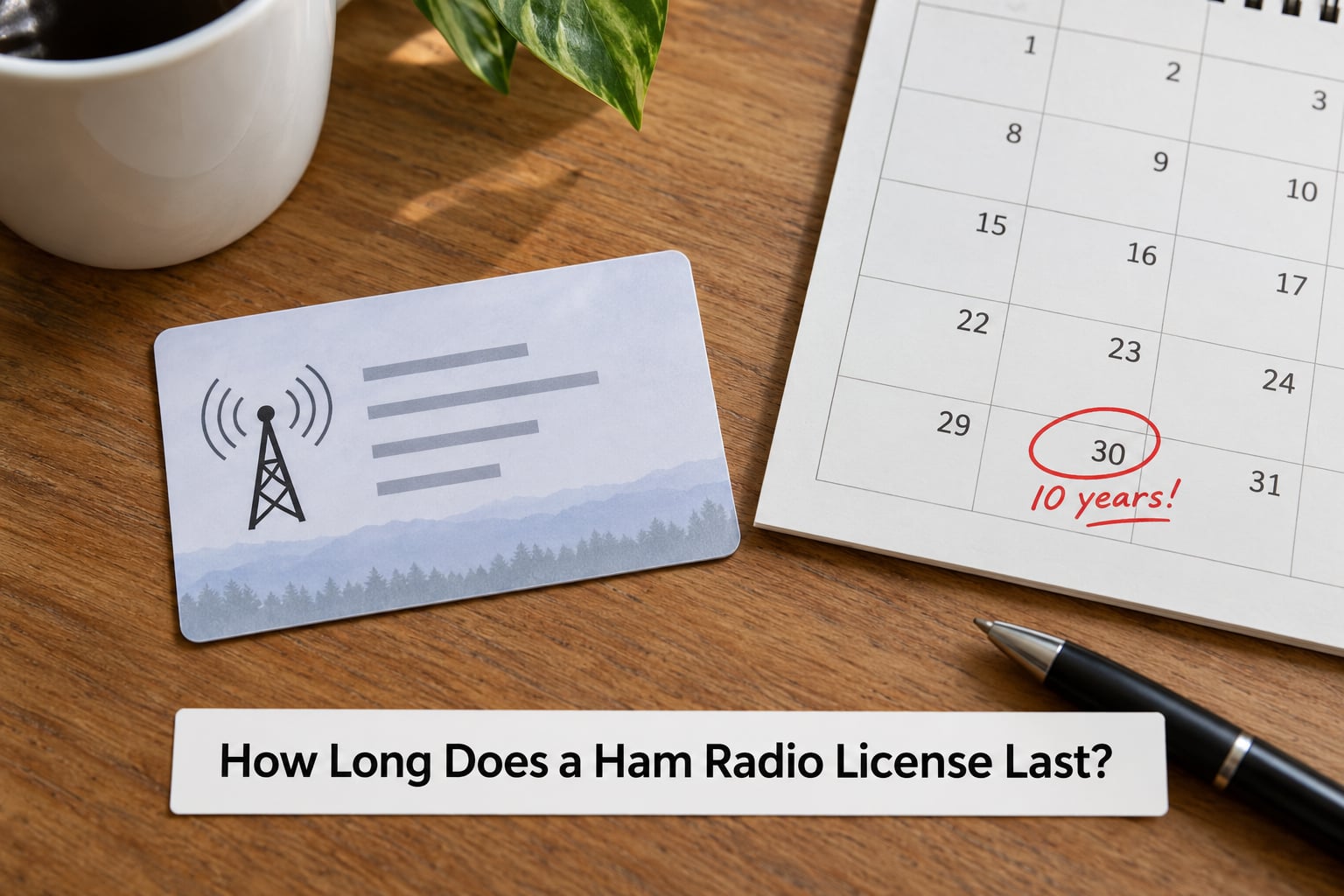
Ten years, measured from the day the FCC issued the license, not from the day your club handed you the paperwork. When you look up your record in the Universal Licensing System, the expiration date shown is that date plus ten years.
That answer holds for all three current classes: Technician, General, and Amateur Extra. There is no separate shorter term for Extra operators, no annual operating certificate, and no periodic re-certification class you have to sit through. You renew once a decade, and the new term runs ten years from the date the renewal is processed.
Two other dates float around ham radio that are worth naming so they do not get mixed up with the license expiration date. A club affiliation or ARRL membership is annual and has nothing to do with your FCC authority. And the vanity status of a call sign has its own request cycle, which is covered further down.
What you print at home and keep in a drawer is only a courtesy copy. The authoritative expiration date is the one in the FCC database, and it is the one that decides whether you are legally licensed to transmit.
What Is the Ham Radio License Validity Period?
The validity period is a flat ten years for every amateur class. It does not vary by class, by region, or by how much you transmit. A brand new Technician and a twenty-year Amateur Extra both sit on the same ten-year clock.
The clock starts on the issue date, which is not always the day you passed the exam. Volunteer Examiner Coordinators typically upload results within a week, and the FCC assigns the license and call sign when it processes the registration. If a registration is delayed, the term still runs from the issue date the FCC assigns, not from the exam date.
Renews work the same way. When you renew, the FCC issues a fresh ten-year term beginning on the date the renewal goes through, so the expiration date you have been tracking shifts forward by a full decade.
- Term length: 10 years from the issue date, all classes.
- Early renewal window: up to 90 days before the expiration date.
- Grace period after expiration: 2 years to renew without a new exam.
- Exam to renew: none, as long as you renew inside the grace period.
- FCC application fee: a flat FCC fee for a ten-year renewal, plus any VEC service fee.
- Renewal method: FCC Form 605 filed in the Universal Licensing System, or through a VEC.
If your record still shows Novice or Technician Plus, that is not an error and it is not a sign that your license expired. Those classes stopped being issued years ago, but the FCC grandfathered the operators who already held them. They renew and operate on the same ten-year term as everyone else.
How Do You Renew a Ham Radio License?
Renewing is a filing exercise, not an exam. The FCC does not require a new written test for a straightforward renewal, and the whole thing takes about ten minutes once you have your login credentials.
Here is the direct-to-FCC route through the Universal Licensing System, or ULS:
- Get your FCC Registration Number. This is the 10-digit FRN tied to your identity. If you have never registered, create an account in ULS first and register for an FRN.
- Log in to the ULS amateur section with your FRN and password.
- Open your amateur license record and confirm the name, call sign, and class before you touch anything.
- File FCC Form 605, the Application for Amateur Radio Operator License. Renewal is a checkbox on the form rather than a separate document.
- Pay the FCC application fee with a credit card or ACH through the FCC payment system.
- Confirm the new expiration date in your record, then update your contact details so the next notice reaches an inbox you actually read.
The VEC route exists because the ULS site has a rough reputation. Operators describe it as clunky, and plenty of them say renewing their car registration was easier. A Volunteer Examiner Coordinator handles the filing for you, and many of them offer a small service fee on top of the FCC fee in exchange for a smoother process and a paper option.
| Renewal route | Cost | Speed | Paper option | Best for |
|---|---|---|---|---|
| Direct through ULS | FCC fee only | Instant to a few days | No | Operators who are comfortable in FCC systems |
| Through a VEC | FCC fee plus a small service fee | Usually a few days | Yes, at most VECs | Anyone who does not want to fight the ULS portal |
The paper route matters more than people expect. Several clubs still run VEC sessions at monthly meetings, and walk-ins get handled on the spot. If you would rather hand paperwork to someone at a club meeting than navigate a government portal, that is a perfectly normal choice.
You can renew starting 90 days before the expiration date. That early window exists so the FCC does not get a pile of last-minute filings, and it settles one question people argue about online: renewing early does not shorten your term. The new ten years starts when the renewal is processed, not on your old expiration date.
How Long Does a Ham Radio License Last in the US?
Exactly ten years. In the United States the FCC amateur radio license term is a flat ten-year cycle for every class, and the expiration date printed in the ULS record is the date the authority ends. The license stays valid through that date, and neither a pending renewal, a mailed notice you have not opened, nor a temporary repair or power situation moves it.
Some operators assume the clock restarts on their birthday or on the anniversary of the exam. It does not. It runs from the FCC issue date, which is why a license that arrives two weeks after your exam session shows a slightly later expiration than the paperwork in your club folder.
Can You Operate After Your Ham Radio License Expires?
No. Once the expiration date passes and the grace period begins, your license is no longer valid authority to transmit. The two-year grace period lets you fix your paperwork without retaking a test. It is not operating permission.
Transmitting after expiration is unlicensed operation under the amateur rules, the same category as someone who never took the exam. It is not a minor clerical lapse. The FCC can issue fines, suspend or revoke a license, and bar individuals from ever holding amateur radio authority again. Enforcement actions against amateur operators are rare compared with commercial cases, but they exist and the people involved tend to be the ones running high-power transmitters.
Receiving is a different matter. A receiver does not need a license. Listening to amateur frequencies, including repeaters and other hams talking, requires nothing at all, and plenty of people listen for years before they ever transmit.
If you find yourself in this position, the practical move is simple: stop transmitting and file the renewal. Forums full of near-panic about this question resolve the same way. The grace period is generous, and the fastest way back on the air is paperwork, not argument.
What Happens if You Miss the Renewal Deadline?
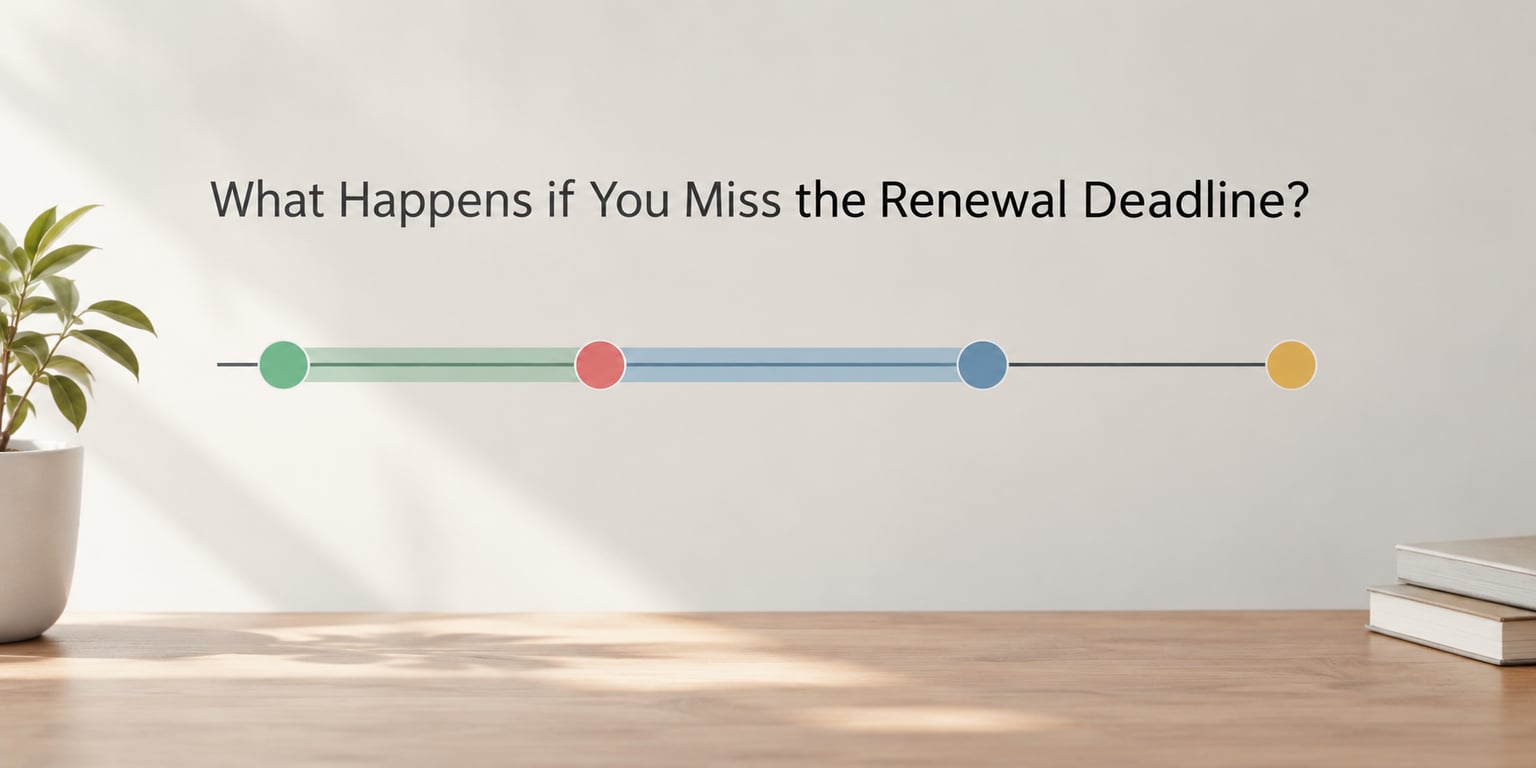
Two things can happen, and which one you get depends on how long you are late.
Inside the two-year grace period: You file Form 605, pay the fee, and your call sign and your class come back. This is the single most reassuring fact in the whole process, and it is the one most guides leave out. No exam is required to renew within the two-year grace period. Operators report letting an Extra license lapse for more than a year and restoring it without sitting down with a question paper.
After two years: The grace period closes and the record goes inactive. The call sign is released back into the pool, and getting back on the air means starting over as a new applicant. You would sit the Technician exam again, get a new license and a new call sign, and the ten-year clock starts fresh.
There is one genuine surprise inside the grace period, and experienced operators know it. Renewing after a lapse returns you at the base class rather than the class you previously held. Someone who let an Amateur Extra license expire and then renewed during the grace period comes back as a Technician. The record then shows the correct call sign sitting next to a reduced class, which reads like a punishment until you know the rule behind it.
Nobody promises automatic reinstatement of the higher class. If you had Extra and want Extra again, the path is to renew as a Technician, then upgrade through the normal exam sequence as time allows.
A few other things that trip people up:
- Missing notices. The FCC emails renewal reminders to whatever address is in your ULS record, and that is frequently an old address you no longer open. Several operators said they only learned their license was expiring when a ham friend noticed, or when a mailed notice finally arrived.
- A stalled online payment. Forum threads carry a lot of frustration about the fee payment step failing in the middle of a renewal. If that happens, going through a VEC is a reasonable fallback rather than a sign that something is wrong with your license.
- The five-year rumor. A past FCC proposal would have shortened the term to five years and raised fees. It was never adopted. Anyone telling you the term just dropped to five years is repeating something from an old document.
- Processing delays. Allow a few days around unusual periods such as a government funding lapse. File well before you need to be on the air rather than on the expiration date itself.
There is no incentive to sit in the grace period. Renewing inside the 90-day early window costs the same as renewing late and leaves no gap at all.
Do Call Signs Expire at the Same Time?
No, and this is the distinction that causes most of the panic. Your license is the legal authority. Your call sign is the identifier assigned to that authority, and it is administered separately through the FCC call sign system.
While your license is valid, your call sign is yours, subject to the vanity rules that apply at the time you requested it. A vanity call sign that carries a specific term can be affected by a change of state or by an upgrade. When the license itself expires, the record goes inactive and the call sign is eventually released for reassignment, which is why some operators who let a license lapse for years lose a call sign they had held for decades.
Inside the grace period the sequence usually works out in your favor: renew, get the record current, and the call sign stays with you. A third party who requests the same call sign during your lapse can end up with it, and getting it back then depends on what the FCC allows at the time.
If you hold a vanity call sign, check its status in the call sign system when you renew rather than assuming the request carries over. It is the part of this process most likely to change without much warning.
How to Check Your License and Expiration Date
Two FCC systems will tell you what you need, and they answer different questions. The amateur license database gives you the expiration date and class. The call sign system tells you who is currently assigned a particular call sign, including a call sign that has been reassigned.
To check your own license:
- Go to the FCC amateur radio database and search the call sign lookup by your call sign or by your name.
- Read the expiration date listed on the record and write it down somewhere other than your shack desk.
- Confirm the class shown, which tells you which privileges you actually held on the expiration date.
- Log in to ULS and confirm your email address and mailing address are ones you read.
That last step is the one that prevents the whole mess. If the email on file is an address from a job you left years ago, you will get no usable reminder. Updating it takes a minute in ULS, and it is the cheapest insurance in this entire article.
Put the expiration date in your phone calendar as a reminder 120 days out, which gives you the full 90-day early window plus a little slack. Operators who do this describe it as the single habit that turns a decade-long obligation into a five-minute errand.
If you are outside the United States, the ten-year answer does not travel. Canada, the United Kingdom, and Germany all run shorter amateur license terms, commonly five years or less. Check with your national regulator rather than assuming the FCC rules apply to your station.
Frequently Asked Questions
How long after a ham radio license expires can you renew it?
You have two years after the expiration date to renew without retaking the exam. During that grace period you file FCC Form 605, pay the current FCC application fee, and your license, class, and call sign are restored. After two years the record closes, your call sign is released, and you would need to test again as a new applicant.
Do I have to retake the exam if my ham radio license expired?
Not if you renew within the two-year grace period. The FCC does not require a new written test for a straightforward renewal, whether you file 90 days before expiration or two years after it. Once the grace period closes, the answer changes: you sit the Technician exam again and start over with a new call sign.
Can I renew my ham radio license online?
Yes. Log in to the FCC Universal Licensing System with your FCC Registration Number, open your amateur record, and file FCC Form 605 as a renewal. Pay the FCC application fee with a card or ACH and confirm the new expiration date. You can also renew through a Volunteer Examiner Coordinator, which costs a small extra service fee but avoids the ULS portal.
How much does it cost to renew a ham radio license?
The FCC charges a flat application fee for a ten-year amateur radio renewal, and the exact amount changes with FCC fee schedules. Renewing directly through the Universal Licensing System costs only that. Going through a Volunteer Examiner Coordinator adds a modest service fee on top, and some VECs still accept paper filings for operators who prefer not to file online.
Does my call sign change when I renew?
Usually it does not. Renewing inside the grace period normally keeps your existing call sign with your record. The exception worth knowing about is class: renewing a lapsed license returns you at the Technician level rather than the higher class you previously held, so a lapsed Extra operator comes back as a Technician.
Is the ham radio license term being shortened to five years?
No. A past FCC proposal would have cut the amateur radio license term to five years and raised fees, and it was never adopted. The US amateur license term remains ten years for Technician, General, and Amateur Extra. If you have seen the five-year figure recently, it is almost certainly recycled from that old proposal.
Conclusion
A US ham radio license lasts ten years, then it renews with no exam as long as you file within the grace period. Do one thing today: look up your expiration date in the FCC database and fix the email address on file. Then file the renewal about 90 days out, before your next portable or remote operation, and confirm the new date on the record the same week.